← 2026 Calendar
Jul 27–31
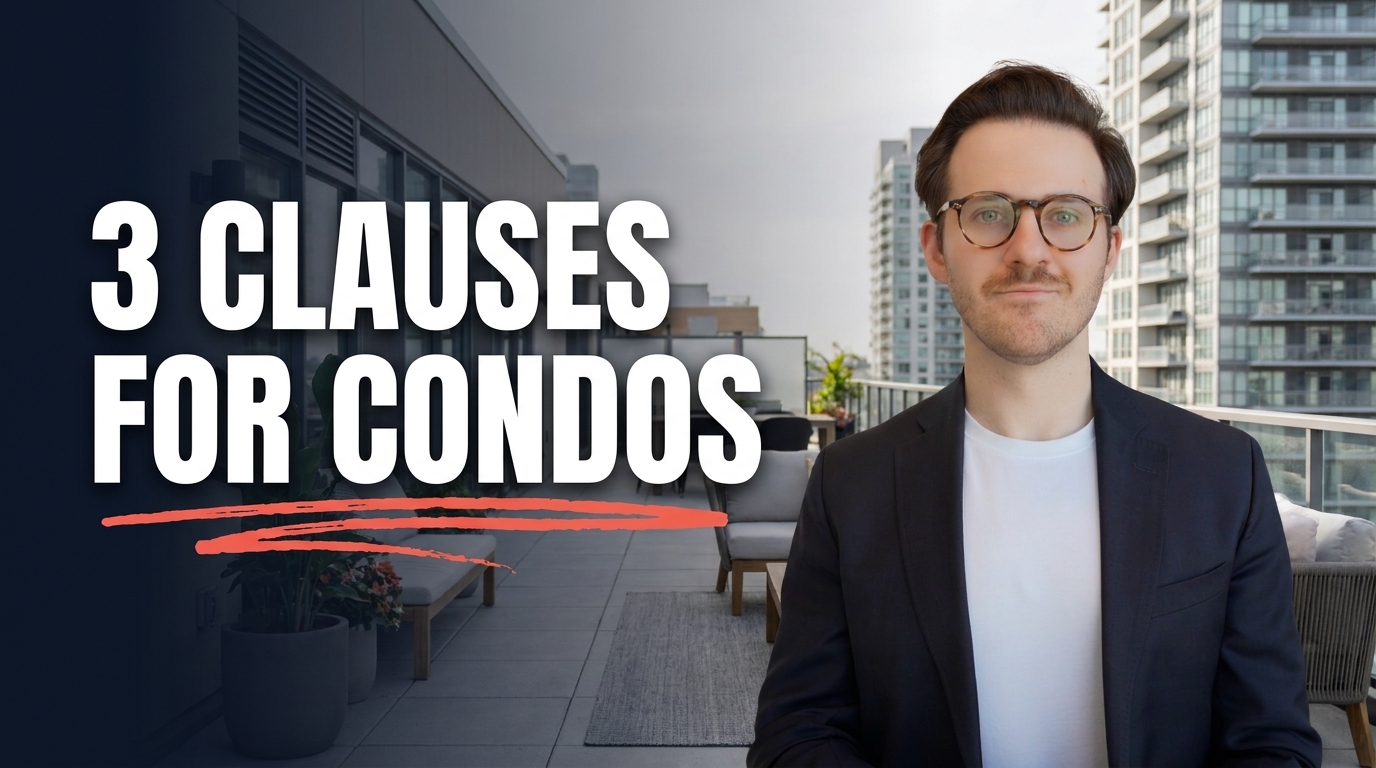
Condo Clauses
YouTube
Instagram
Newsletter
Mon, Jul 27
Title
Thumbnail
✦ Regenerate
Replace
⬇ Download
Remove
Script
**HOOK** Condo transactions are different — and your offer needs to reflect that. I've sat on both sides of this table. As a licensed Realtor writing offers, and now as a real estate lawyer reviewing what comes in. And what I can tell you is that a standard offer on a freehold home is not the same as an offer on a condo unit. If your agreement doesn't account for what makes a condo purchase unique, you're exposed in ways that a standard offer simply won't protect you from. Today I'm walking through three clauses that I recommend be in every single condo offer — what they are, why they matter, and what happens when they're missing. **INTRO** My name is Zachary Soccio-Marandola. I'm a lawyer here in Toronto. And I help people like you close real estate deals every single day. If you enjoy this type of content, make sure you subscribe and join our community. And if you have a closing coming up, we've built the most transparent legal fee calculator online — it gives you a full breakdown of every dollar you'll spend and even calculates closing costs like land transfer tax and title insurance. That's linked in the description below. **Why Condo Offers Are Different** When you buy a freehold home, you're buying a property. When you buy a condo, you're buying a unit inside a corporation. And that distinction matters — a lot. The condominium corporation has its own declaration, its own by-laws, its own rules. It has its own finances. It can levy costs against unit owners. It can restrict what you do inside your own unit. And everything that happened in that unit before you bought it — any renovations, any alterations, any decisions made by the previous owner — can follow you through closing if your agreement doesn't address it. That's the exposure. And that's why these three clauses exist. **Clause 1: Status Certificate Review** Now, the first clause is the most well-known of the three, but it's still worth walking through properly — because a lot of buyers and even some Realtors treat it as a formality. It is not a formality. A status certificate is a snapshot of the condominium corporation's financial and legal health at a given point in time. It tells you whether the reserve fund is adequately funded. It tells you whether there's any pending litigation involving the corporation. It shows you the current budget, the common expenses, and any arrears on the unit. And it includes the declaration, the by-laws, and the rules that every owner in that building is bound by. This is the document that tells you what you're actually buying into. So the clause we recommend is a condition making the agreement conditional upon your lawyer reviewing and approving the status certificate. Not just receiving it — reviewing and approving it. Your lawyer has ten days from receipt of the status certificate to review it and report back. [SCREEN — show Status Certificate Review condition clause] And that's because there's a lot in a status certificate that a buyer on their own is not going to catch. An underfunded reserve fund means a special assessment could be coming. Pending litigation could affect the value of the unit or the finances of the corporation. Rules buried in the by-laws could restrict how you use the unit. A lawyer review is what surfaces those issues before you're locked in. **Clause 2: Compliance — Representations and Warranties** Now, the second clause addresses something that comes up more often than buyers expect — and it has nothing to do with the corporation's finances. It has to do with what the previous owner did inside the unit. Inside a condominium unit, you cannot make improvements, additions, alterations, or repairs without the consent of the condominium corporation — if the declaration or by-laws require it. Not every alteration requires consent. But many do. And when an owner makes unauthorized changes, those changes don't disappear when they sell. They become your problem. So the clause we include is a representation and warranty from the seller that, with respect to the unit, the declaration, by-laws, and rules have all been complied with — and that there have been no improvements, additions, alterations, or repairs made that required the consent of the condominium corporation, unless that consent was properly obtained. [SCREEN — show Compliance Rep and Warranty clause] So what this does is shift the legal risk back to the seller where it belongs. If they made an unauthorized alteration and didn't disclose it, and it surfaces after closing, you now have a contractual representation you can rely on. Without this clause, you're buying whatever the previous owner left behind — and you may have no recourse. **Clause 3: Special Assessment — Representations and Warranties** Now the third clause deals with one of the most common surprises buyers face in a condo transaction — the special assessment. A special assessment is a cost levied by the condominium corporation against all unit owners when the reserve fund doesn't have enough money to cover a major repair or unexpected expense. Roof replacement, parking structure repairs, elevator modernization — these are the kinds of projects that trigger special assessments. And they can be significant. The risk window for a buyer is the period between when the agreement is signed and when closing happens. A special assessment can be issued, pending, or contemplated during that window — and if your agreement doesn't address it, you could be the one responsible for it. So the clause we include does two things. First, it's a representation from the seller that, as of the date of the agreement, there are no special assessments issued, pending, or contemplated with respect to the unit. Second, it's a warranty — if any special assessment is levied after the agreement is signed but prior to closing, the seller is responsible for all costs associated with it. [SCREEN — show Special Assessment Rep and Warranty clause] And that's because a special assessment that gets announced the week before closing is not a risk the buyer should absorb. The seller owned the unit during the period when that assessment was generated. This clause creates certainty from the moment the agreement is signed — you know that whatever comes up between now and closing, it's not coming out of your pocket. **SUMMARY** Three clauses. Status certificate review, compliance representations, and special assessment protection. None of them are complicated — but all three of them do real work in a condo transaction. If your offer doesn't have them, it's missing something. **OUTRO** If you're enjoying these behind the scenes, real estate law videos, make sure you subscribe to the channel — I post a new video every week. And if you're a Realtor, I also send a weekly update about different legal situations that come up in our closings. That's our Realtor Newsletter and you can subscribe to it with the link down in the description. Thanks for watching.
Description
🌐 Website: https://www.socciomarandola.com/ 📱 Legal Fee Calculator: https://www.socciomarandola.com/legal-fee-calculator 🚀 REALTOR® Newsletter: https://www.socciomarandola.com/newsletter Buying a condo in Ontario is not the same as buying a freehold home — and your offer needs to reflect that. In this video, Toronto real estate lawyer Zachary Soccio-Marandola walks through three specific clauses that should be in every condo offer: a status certificate review condition, a compliance representation and warranty covering unauthorized alterations, and a special assessment representation and warranty that protects buyers from costs levied between signing and closing. Each clause addresses a real exposure that a standard offer won't cover. Whether you're a first-time condo buyer or an Ontario Realtor putting together an offer, understanding what these clauses do — and what's at risk when they're missing — is the difference between a clean closing and an expensive surprise. This video breaks down the legal reality behind each one in plain English. Video Chapters 00:00 Introduction 02:05 Why Condo Offers Are Different 03:40 Status Certificate Review 05:05 Unauthorized Alterations 06:45 Special Assessment Protection 07:00 Summary *This video is for general informational purposes only and does not constitute legal advice. Watching this video does not create a lawyer–client relationship. Real estate laws and procedures can vary depending on the facts of each case and the jurisdiction. Always consult with a qualified real estate lawyer in your area before relying on or acting upon any of the information discussed in this video.*
✦
Chat about this week