← 2026 Calendar
Jun 1–5
Land Transfer Tax
YouTube
Instagram
Newsletter
Mon, Jun 1
Title
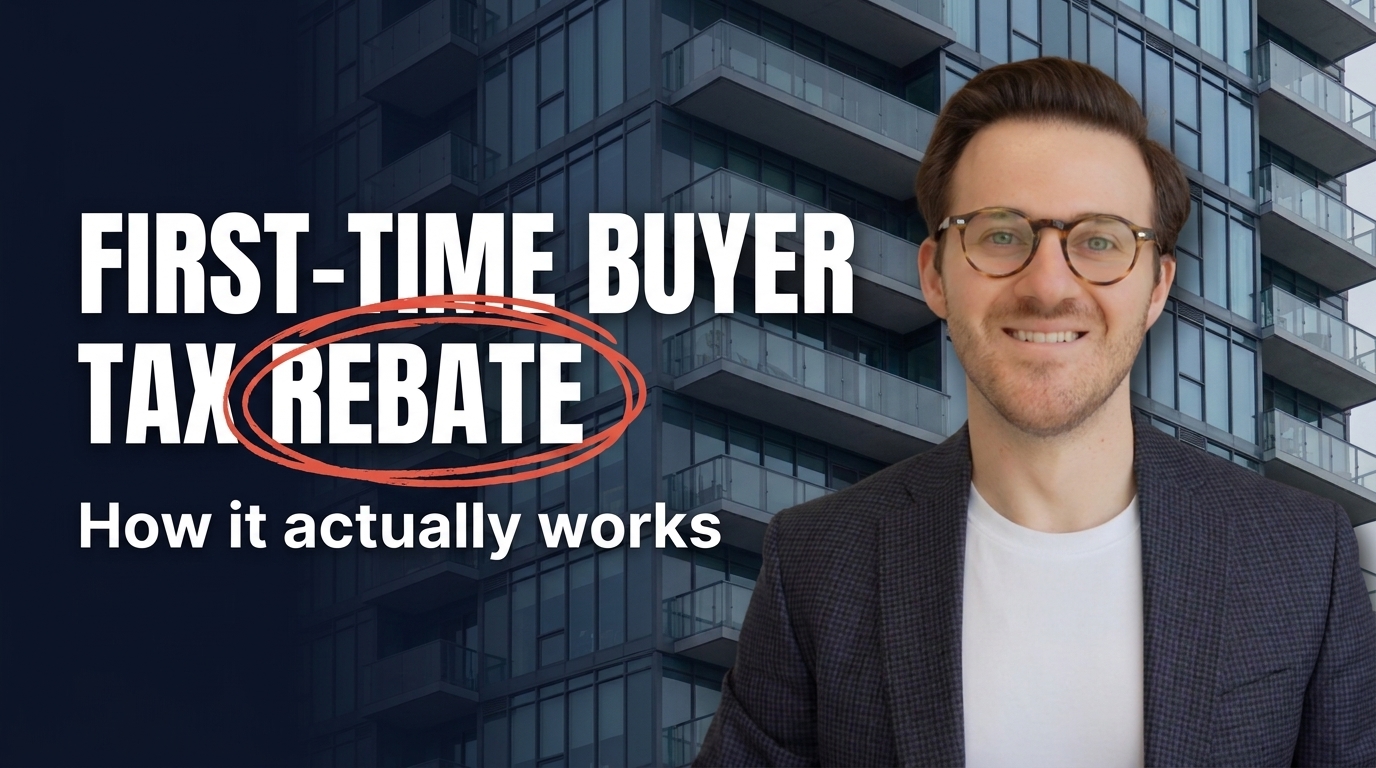
Thumbnail
✦ Regenerate
Replace
⬇ Download
Remove
Script
HOOK Land transfer tax is one of the most significant closing costs buyers incur when purchasing property in Ontario. And this can be especially surprising for first-time buyers. Working as a real estate lawyer and dealing with first-time home buyers on a daily basis, I can tell you that this is the number that catches them off guard. So, if you're buying your first home in Ontario, there are rebates available that put money back in your pocket — but only if you qualify. In this video we'll be breaking down exactly what those rebates are, what you need to qualify, and what the numbers actually look like. INTRO — VERBATIM My name is Zachary Soccio-Marandola. I'm a lawyer here in Toronto. And I help people like you close real estate deals every single day. If you enjoy this type of content, make sure you subscribe and join our community. And if you have a closing coming up, we've built the most transparent legal fee calculator online — it gives you a full breakdown of every dollar you'll spend and even calculates closing costs like land transfer tax and title insurance. That's linked in the description below. CORE What Is Land Transfer Tax? So let's start with the basics. What is land transfer tax? In Ontario, every time a property changes hands, the buyer pays a tax to the province. That's land transfer tax. The seller doesn't pay it. The buyer does. And it comes due on closing day — it gets paid at the time of registration. Now, it's not a flat percentage. It's calculated on a tiered scale based on your purchase price. Think of it like income tax brackets — different portions of the price are taxed at different rates. The higher the purchase price, the more you pay. And for most buyers in today's market, it adds up to a significant number. But as a First-time Homebuyer, you are eligible for a rebate on that land transfer tax. So, let’s talk about that. Who Qualifies for the Rebate? In order to qualify for a FTHB LTT Rebate, there are four criteria. And You need to meet all of them. First — you must be a Canadian citizen or a permanent resident of Canada. Second — you must be at least eighteen years old. Third — you must never have previously owned a home or an interest in a home anywhere in the world. So if you owned property in a different province, or different country, you would not be eligible to receive the rebate. It also doesn't matter how you came to own it. If you were gifted a property, if you inherited one — that still counts. Any prior ownership interest in residential property, anywhere in the world, disqualifies you. Fourth — and lastly, you must intend to occupy the property as your principal residence within nine months of closing. Now, those are the four criteria. What If Two People Are Buying Together? But one of the more common questions, is what if there are two buyers on title… well it gets a little more nuanced. If you're buying with someone else and only one of you qualifies, the rebate is proportionate to the qualifying buyer's share of the property. So if you each own fifty percent of the property, the qualifying buyer can claim fifty percent of the maximum rebate. The rebate follows the ownership interest. This applies only to non-spouses though. Now, it works differently when the two buyers are spouses. And the spousal rule is one I want to spend some real time on — because it's the one that catches people most off guard. The Spousal Rule For the purposes of land transfer tax, it's not just about whether you've previously owned a home. It's also about whether your spouse has. The key phrase is this: your spouse cannot have owned a home while he or she was your spouse. While they were your spouse. That timing is everything. Let me walk you through three scenarios. Scenario one. Your spouse owned a home during your relationship — even if they sold it before you're buying this new property together. In that case, neither of you qualifies. The rebate is gone entirely. And it doesn't matter whose name the new property goes in. Since you’re a spouse, and your spouse owned property while they were your spouse, you;ve lost your eligibility. Scenario two. Your spouse owned a home and sold it before you became spouses. In that case, you still qualify. And here's the part that surprises people: you can claim the full rebate on both your interest and your spouse's interest, up to the full maximum. So you can both be on title, and in a sense your spouse gets that benefit again, despite prior ownership. It's a nuance that most people — and even some professionals — don't know about. If you're in that situation, flag it to your lawyer early so it gets documented correctly at closing. What Is the Provincial Rebate? So, now let’s tal about numbers. what do you actually get back? A common misconception is that If you're a first-time home buyer, then you don't pay any land transfer tax, and that's incorrect. The rebate has a cap on it. And in most cases, with today’s market prices, FTHB will probably still pay land transfer tax. The maximum provincial rebate is $4,000. And it's applied as a credit at closing — not a cheque that arrives weeks later, despite the term rebate. Your lawyer handles it at the time of registration. You don't receive a separate payment. You just see a reduced amount owing on closing. At a purchase price of approximately $368,000, the $4,000 rebate covers your entire provincial land transfer tax. You owe nothing. Above that price point, you receive the full $4,000 rebate, but you still owe the difference. So the higher the purchase price, the more that comes out of pocket — even with the rebate. Toronto: The Second Land Transfer Tax Now, if you're buying in Toronto specifically, there's something you need to know. Toronto is the only municipality in Ontario with its own land transfer tax. It's called the Municipal Land Transfer Tax. Same trigger as the provincial one. And for most purchase prices, the same tax calculation. So if you're buying in Toronto, you're paying land transfer tax twice — provincial and municipal — on the same purchase price. Now, again, some consolation for first-time buyers: there's a separate municipal rebate of up to $4,475. And both rebates can be stacked. If you qualify, you're claiming the provincial and the Toronto rebate at the same time. Let's look at what that actually means in real numbers. The Numbers: Ontario (Outside Toronto) [SCREEN RECORDING — Switch to Chart 1: Provincial LTT Breakdown] So here are three price points for a first-time buyer purchasing outside of Toronto. Purchase Price Gross Provincial LTT First-Time Buyer Rebate Net LTT Owing $600,000 $8,475 ($4,000) $4,475 $900,000 $14,475 ($4,000) $10,475 $1,200,000 $20,475 ($4,000) $16,475 You can see the rebate stays flat at $4,000. The purchase price goes up, the tax goes up, but the rebate doesn't move. The higher your price point, the smaller the rebate feels relative to what you're actually paying. The Numbers: Toronto [SCREEN RECORDING — Switch to Chart 2: Toronto LTT Breakdown] Now let's look at those same price points in Toronto. Remember — you're paying both taxes. And as a first-time buyer, you're entitled to both rebates. Purchase Price Provincial LTT Toronto MLTT Combined Gross Total Rebates Net LTT Owing $600,000 $8,475 $8,475 $16,950 ($8,475) $8,475 $900,000 $14,475 $14,475 $28,950 ($8,475) $20,475 $1,200,000 $20,475 $20,475 $40,950 ($8,475) $32,475 That's the reality of buying in Toronto as a first-time buyer. Even with both rebates stacked, those net numbers are significant. And without the rebates — if you don't qualify — you're looking at the combined gross column. Every single dollar. This is why land transfer tax is the number that catches people off guard. It's not a small line item. At $900,000 in Toronto, you're looking at over $20,000 in land transfer tax even after both rebates. That's real money, and it's due on closing day. Wrapping Up All right. So now you know what land transfer tax actually is, what you need to qualify for the rebate, how the spousal rules work, and what the numbers look like at different price points — both inside and outside Toronto. This is one of those closing costs that surprises a lot of first-time buyers. But if you're watching this before your purchase, you're ahead of it. OUTRO — VERBATIM If you're enjoying these behind the scenes, real estate law videos, make sure you subscribe to the channel — I post a new video every week. And if you're a Realtor, I also send a weekly update about different legal situations that come up in our closings. That's our Realtor Newsletter and you can subscribe to it with the link down in the description. Thanks for watching.
Description
🌐 Website: https://www.socciomarandola.com/ 📱 Legal Fee Calculator: https://www.socciomarandola.com/legal... 🚀 REALTOR® Newsletter: https://www.socciomarandola.com/newsl... If you have a closing coming up in Ontario, this video is for you. A lot of buyers go into closing day not really knowing what's happening behind the scenes — and that uncertainty is what makes it stressful. In this video, I'm walking you through the full chain of events on closing day as a buyer in Ontario: from when the mortgage funds land in trust, to the document exchange between lawyers, to the moment you get the lockbox code and walk through the front door of your new home. I'll also explain why you probably aren't getting your keys at noon — and why that's completely normal. Whether it's a delayed mortgage advance, a seller who hasn't vacated yet, or a chain of same-day closings all waiting on each other, I'll break down exactly what causes afternoon closings and what to expect. If you understand the sequence, the waiting makes sense. And when the waiting makes sense, closing day feels a lot less stressful. Video Chapters 00:00 Introduction 00:45 What's Already Done Before Closing Day 01:14 Closing Day: Step by Step 03:54 Timing of Closing 05:04 Avoid Same Day Closings 05:55 Summary This video is for general informational purposes only and does not constitute legal advice. Watching this video does not create a lawyer–client relationship. Real estate laws and procedures can vary depending on the facts of each case and the jurisdiction. Always consult with a qualified real estate lawyer in your area before relying on or acting upon any of the information discussed in this video.
✦
Chat about this week