← 2026 Calendar
May 25–29
The Closing Process (General)
YouTube
Instagram
Newsletter
Mon, May 25
Title
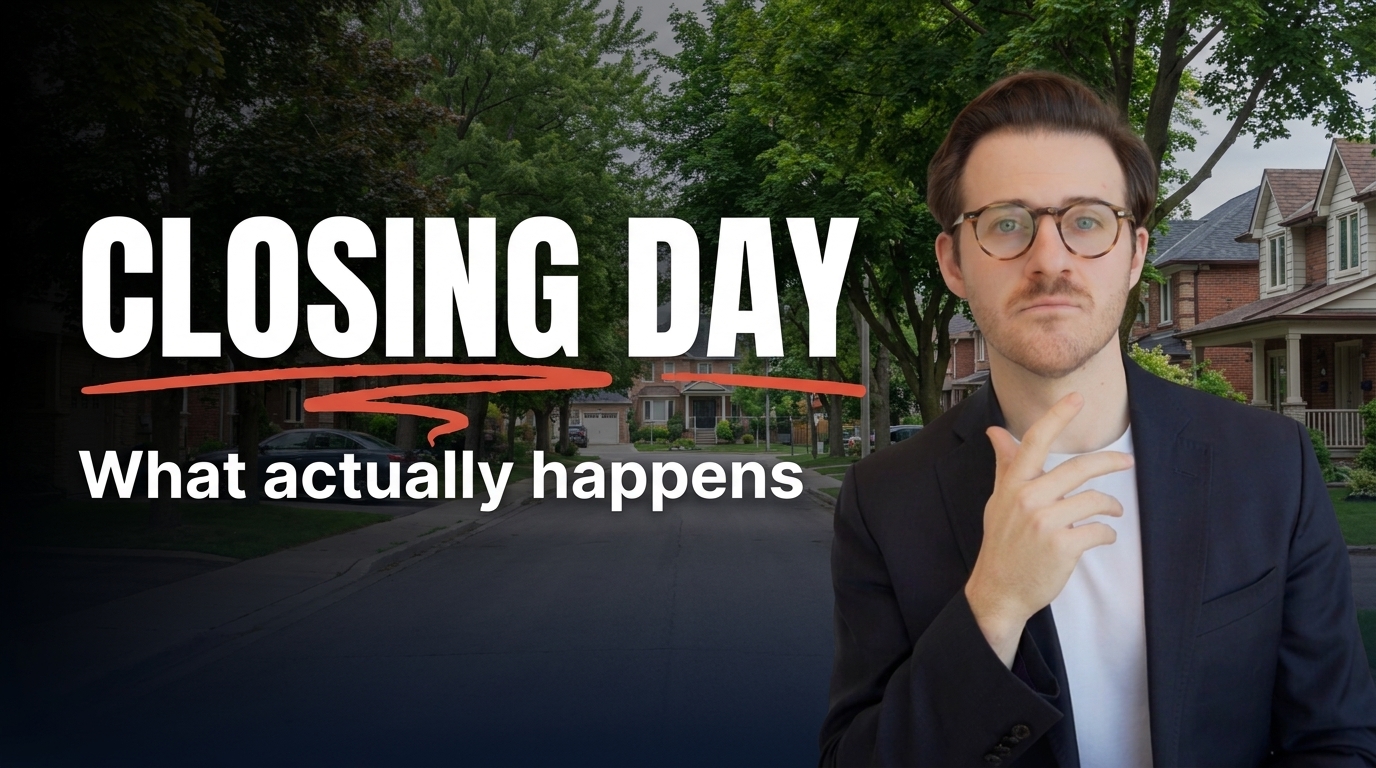
Thumbnail
✦ Regenerate
Replace
⬇ Download
Remove
Script
HOOK One of the most common questions I get is: what actually happens on closing day? As someone who closes deals every day, I'm going to walk you through exactly what that looks like as a Buyer — the chain of events from the morning of closing to the moment you get your keys. And I'm going to give you a few tips along the way so your closing day goes as smoothly as possible. INTRO My name is Zachary Soccio-Marandola. I'm a lawyer here in Toronto. And I help people like you close real estate deals every single day. If you enjoy this type of content, make sure you subscribe and join our community. And if you have a closing coming up, we've built the most transparent legal fee calculator online — it gives you a full breakdown of every dollar you'll spend and even calculates closing costs like land transfer tax and title insurance. That's linked in the description below. CORE Before Closing Day Even Starts In Ontario, by the time your actual closing day arrives for your new home, most of the heavy lifting is already done. In the time leading up to closing, we have already reviewed title, ordered and received title insurance, prepared all the necessary closing documents, met with you to sign those documents, and collected your downpayment or final purchase funds. Generally, there's no paperwork for you on closing day itself. You are not going into an office or jumping into a meeting. For the most part… you’re waiting. But it really helps to understand exactly what’s happening behind the scenes. The Chain of Events So here is exactly what happens, from a lawyer's perspective, on your closing day. First, we assemble all the purchase funds. That means receiving your mortgage funds and combining them with the balance that you brought in ahead of time. Your lender will wire the mortgage proceeds directly into our trust account — usually on the morning of closing, sometimes the day before. And until that money lands, nothing else can really move. Once all the money is together in full, it’s used to pay the Seller, pay Land Transfer Tax, pay the title insurance premium, and pay our legal fees. Now, at some point — again, usually in the morning — the lawyers are also exchanging signed documents. When we're on the buying end, we're sending over a Direction for Title and an undertaking to readjust the Statement of Adjustments. The Seller's lawyer is going to send over the Vendor's Closing Certificate, a Declaration that the Seller is not a non-resident, and an undertaking from the Seller's lawyer that they will discharge any mortgage on title for the Seller. This is necessary because as the buyer, we need to acquire clean title — since in most cases we are registering a new mortgage on title for the buyer. So at this point, we've received the mortgage funds and have exchanged documents with the Seller's lawyer. We now move on to wiring the balance of the purchase price to the Seller's lawyer. This is the most important part of the closing. The Seller needs their money before we're closed. Now, once the Seller's lawyer actually receives the funds in their trust account, things start to finalize. The Seller's lawyer will "release" the deed — which means we, as the buyer's lawyer, can go in and register the new transfer, which gives legal title to the new buyer. In Ontario, this is done using a system called Teraview. It's all digital — no paper deeds, no one showing up at a registry office. If there's a new mortgage, we register it on title right after the transfer. The last step is the keys. Now, before, keys used to be physically exchanged — the Seller would courier the keys to the buyer's lawyer's office, and once we were officially closed, the buyers would come in and pick them up. Now, almost all of our deals close by exchanging a lockbox code. The Seller's Realtor will typically leave a lockbox on the property. That code is provided to us from the Seller's lawyer, and once all the previous steps are complete, we release that code directly to our clients — the buyers. That means you no longer have to make a detour to your lawyer's office on closing day. Once you get confirmation, you head straight to your new property, get the keys, and take possession of your new home. Why You're Probably Won’t Get Keys at Noon Now — and I want to be direct about this because it's the thing that causes the most stress on closing day — you are probably not getting your keys in the morning. That is just how closings work. Here's why. In Ontario, we don't have set closing times. The standard Agreement of Purchase and Sale gives the parties until six o'clock to complete the transaction. In practice, it works more like five PM — because that's when the land registry closes. But, there's no fixed hour in the day. Closing happens when everything required is done. And that looks different on every deal. There are various things that stop deals from closing first thing in the morning. Sometimes the delay is on the mortgage side. Lenders don't always advance funds first thing in the morning. If the funds arrive at two in the afternoon, everything starts moving from there. Sometimes we're waiting on the Seller's lawyer. They may be managing multiple closings that day. We're exchanging documents, confirming receipt of funds, releasing the transfer — and all of that depends on another party responding. That's not something we can fully control, and it affects the timing. Sometimes it's something as straightforward as this: the Seller hasn't vacated the property yet. And because vacant possession is a requirement in most deals, the Seller's lawyer holds off on closing until it's confirmed. That alone can push things to the afternoon. And then there's the situation where a buyer is also selling on the same day. This is probably the most common reason closings run late. If you need the proceeds from your sale to fund your purchase, your purchase can't start until your sale is fully closed. And if that buyer is in the same situation — waiting on their own sale — you've got a domino effect. Each deal waits on the one before it, and things get very tight to that six o'clock deadline. Now, occasionally a closing will run right up against that five o'clock registration cutoff. When that happens, there are ways for lawyers to handle it so that you still get possession that day even if the formal registration happens the following morning. It's not that common, but it's manageable, and your lawyer will walk you through it if it comes up. The main thing I want you to take away from this: don’t schedule your movers or any trades, etc for early in the day… there is no guarantee on the timing of closing. In my experience, most deals close between 2-5pm. SUMMARY All right — so that's closing day. The chain of events behind the scenes while you're waiting for the call. When you understand the sequence, the waiting makes sense. And when the waiting makes sense, closing day feels a lot less stressful. If your closing does get delayed — and sometimes it does — that's a whole separate conversation. We'll cover that in another video. OUTRO If you're enjoying these behind the scenes, real estate law videos, make sure you subscribe to the channel — I post a new video every week. And if you're a Realtor, I also send a weekly update about different legal situations that come up in our closings. That's our Realtor Newsletter and you can subscribe to it with the link down in the description. Thanks for watching.
Description
🌐 Website: https://www.socciomarandola.com/ 📱 Legal Fee Calculator: https://www.socciomarandola.com/legal-fee-calculator 🚀 REALTOR® Newsletter: https://www.socciomarandola.com/newsletter If you have a closing coming up in Ontario, this video is for you. A lot of buyers go into closing day not really knowing what's happening behind the scenes — and that uncertainty is what makes it stressful. In this video, I'm walking you through the full chain of events on closing day as a buyer in Ontario: from when the mortgage funds land in trust, to the document exchange between lawyers, to the moment you get the lockbox code and walk through the front door of your new home. I'll also explain why you probably aren't getting your keys at noon — and why that's completely normal. Whether it's a delayed mortgage advance, a seller who hasn't vacated yet, or a chain of same-day closings all waiting on each other, I'll break down exactly what causes afternoon closings and what to expect. If you understand the sequence, the waiting makes sense. And when the waiting makes sense, closing day feels a lot less stressful. Video Chapters [00:00] Introduction [00:00] What's Already Done Before Closing Day [00:00] The Chain of Events: Step by Step [00:00] Assembling the Purchase Funds [00:00] Exchanging Documents Between Lawyers [00:00] Wiring Funds to the Seller [00:00] Registering Title and the Mortgage [00:00] How You Get Your Keys [00:00] Why You're Probably Not Getting Keys Until the Afternoon [00:00] Common Reasons Closings Run Late [00:00] What to Do If Your Closing Gets Delayed [00:00] Final Takeaways *This video is for general informational purposes only and does not constitute legal advice. Watching this video does not create a lawyer–client relationship. Real estate laws and procedures can vary depending on the facts of each case and the jurisdiction. Always consult with a qualified real estate lawyer in your area before relying on or acting upon any of the information discussed in this video.*
✦
Chat about this week