← 2026 Calendar
May 11–15
Substantial Damage
YouTube
Instagram
Newsletter
Mon, May 11
Title
Thumbnail
✦ Regenerate
Replace
⬇ Download
Remove
Script
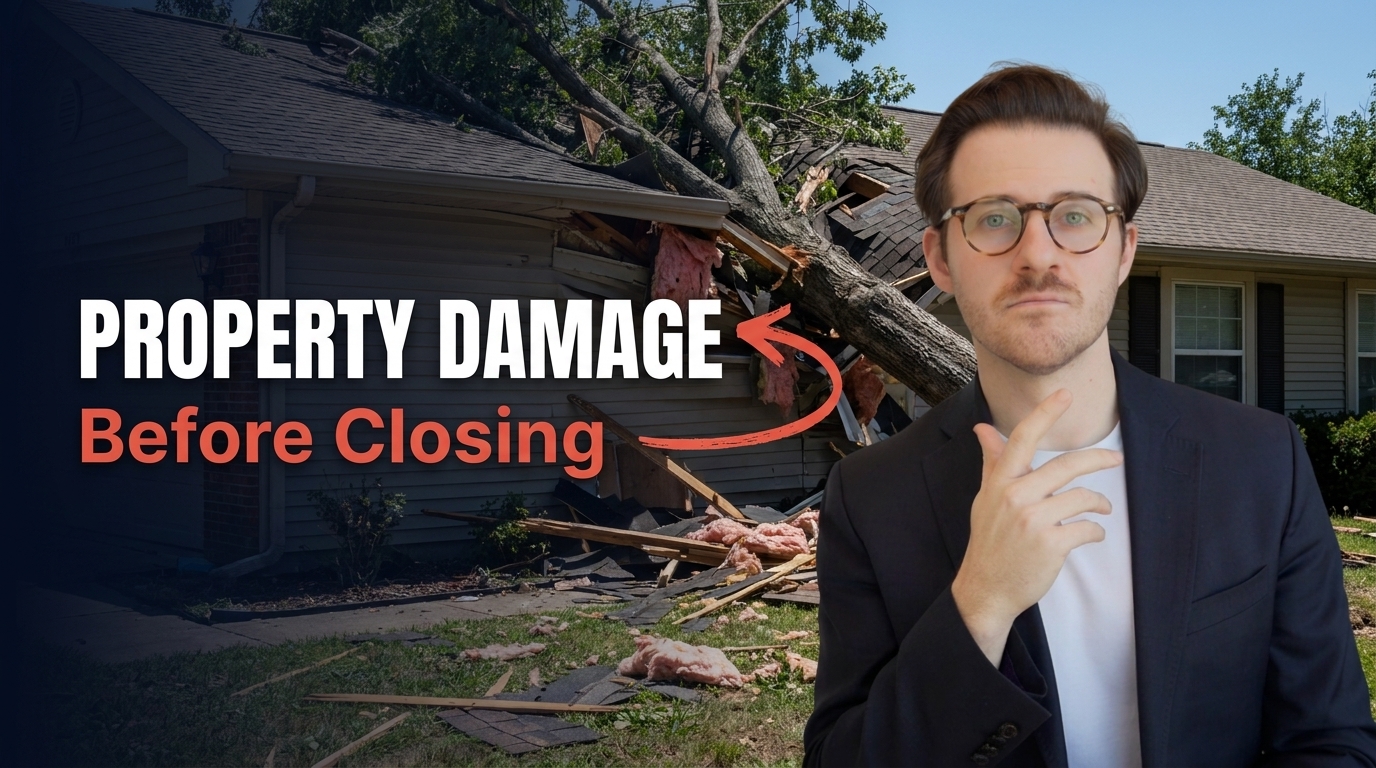
[HOOK] You’ve entered into an Agreement of Purchase and Sale. You’re waiting on closing. And then — the property you’re expecting to buy has a fire. Or there’s a flood. Or some type of Major damage. What happens to the deal. Well. There’s a clause already sitting in your agreement by default that covers just this scenario. And I’m going to show you it and explain it right here. Sp whether you’re a buyer getting ready to purchase, or a professional in the industry — this is a video worth watching. [INTRO] My name is Zachary Soccio-Marandola. I’m a lawyer here in Toronto. And I help people like you close real estate deals every single day. If you enjoy this type of content, make sure you subscribe and join our community. And if you have a closing coming up, we’ve built the most transparent legal fee calculator online — it gives you a full breakdown of every dollar you’ll spend and even calculates closing costs like land transfer tax and title insurance. That’s linked in the description below. [CORE] The Clause So let’s start with the contract. When you sign an Agreement of Purchase and Sale in Ontario — that being the standard OREA form — there’s a clause titled Insurance built right into it. It’s clause fourteen on current Form 100. Most buyers never read it. Most buyers never have to. But here’s what it says, in simple terms. From the moment your deal goes firm until closing day, the property remains at the seller’s risk. If there is substantial damage to the property before closing, you as the buyer get a choice. Now, take a note of that word — substantial — it’s going to be important. We’ll come back to it later. So Your Two Options if there is substantial damage… Option one: you can terminate the agreement and you get all of your money back. Your deposit, returned in full, no deductions. Option two: you take the available insurance proceeds and you close anyway. Those are your two paths. And only you as the buyer get to choose. The seller doesn’t decide. The seller’s agent doesn’t decide. You decide. Now, the next question is the obvious one. What counts as substantial damage? Spoiler, im going to give you a miserable legal answer. There’s no exact threshold. No percentage of purchase price. Courts have looked at this, and what they’ve said is that it’s a contextual question. It’s a question of fact. You look at the cost of the repairs. You look at the extent of the physical damage. You look at whether the home is still habitable. And you ask whether the property you’re being asked to close on is still materially the same property you agreed to buy. Minor damage — a small water leak, cosmetic damage, something that can easily be— that’s probably not going to qualify. But major fire damage, structural loss, extensive flooding — that’s the kind of damage the clause is designed for. So there’s no magic answer. But the question the law is asking is a practical one: is this still the same bargain? Is the property orimarily the same as what you intended to buy Your Two Implied Rights Now, two more things flow from this clause that buyers need to know about. The first is the right to inspect. If there's a dispute about whether the damage is substantial — if you're not sure what you're looking at — you have the right to go back into that property and see it for yourself. You get eyes on the situation before you make your decision. The second is the right to review the insurance details. You're entitled to know what coverage the seller has and what proceeds would actually be available to you if you decided to close. Now, here's where it gets important. Those rights exist to help you make a decision — not to buy you unlimited time. Contracts still have deadlines, and while reasonable extensions should be granted to allow for a good faith use of the insurance clause, you're not entitled to wait and see whether the insurer is going to pay, or when. In fact, there's a real case where a buyer tried to get the seller to guarantee a specific insurance payout before they would close. The seller wouldn't agree to that. So the buyer didn't close. The court treated the buyer as being in breach — because nothing in the clause gave them that right. So if the details come in and you're satisfied — you close and you take the proceeds. But if you're not satisfied with the payout, or you're not confident it's going to be enough — your option is to terminate. Get your deposit back and walk away. That's the clause doing exactly what it's supposed to do. Wrap So that’s the framework. A firm deal, a damaged property, and a clause that was quietly sitting in your agreement the whole time, waiting to do exactly this job. If you’re a buyer, the takeaway is simple. Know that this clause exists. Know that it gives you two options. And if something happens before your closing day, talk to your lawyer before you do anything else. [OUTRO] If you’re enjoying these behind the scenes, real estate law videos, make sure you subscribe to the channel — I post a new video every week. And if you’re a Realtor, I also send a weekly update about different legal situations that come up in our closings. That’s our Realtor Newsletter and you can subscribe to it with the link down in the description. Thanks for watching.
Description
✦
Chat about this week